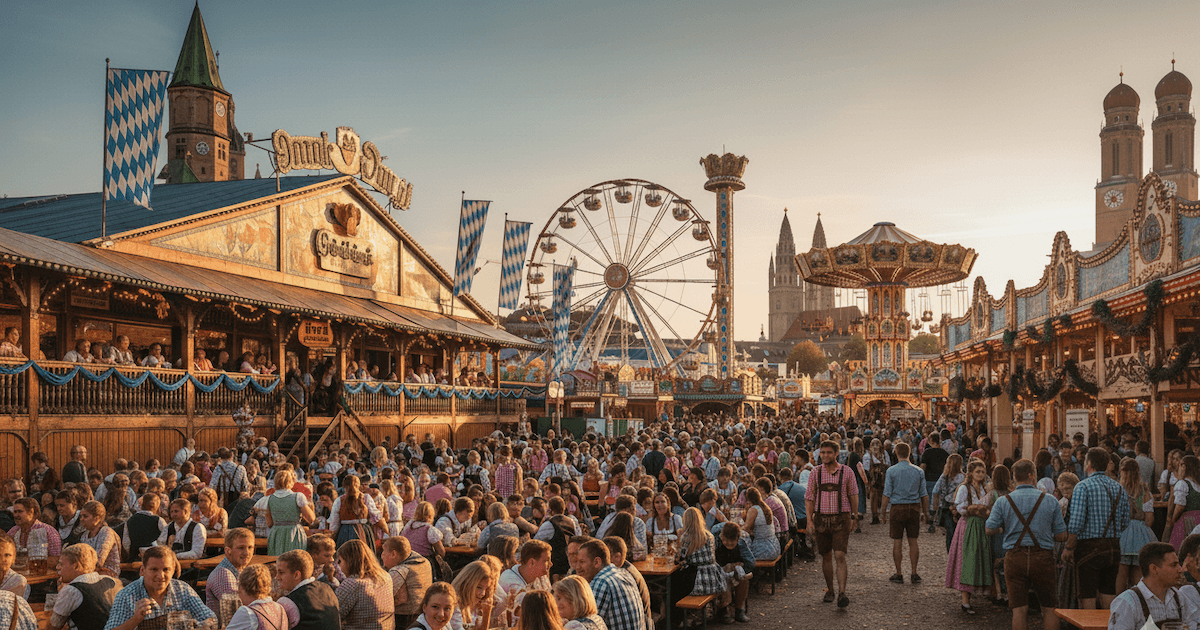
If you've ever glanced at the calendar during Oktoberfest season and felt a moment of confusion, you're not alone. Despite its name, the world's largest beer festival kicks off in mid-September and runs through early October. This seemingly contradictory timing has puzzled visitors for generations, but the answer reveals a fascinating blend of royal history, Bavarian weather, and practical festival planning.
It Started with a Royal Wedding
The story of Oktoberfest begins on October 12, 1810, when Crown Prince Ludwig of Bavaria married Princess Therese of Saxe-Hildburghausen in Munich. To celebrate this grand occasion, the royal couple invited all Munich citizens to join festivities held on a meadow just outside the city gates. The celebrations lasted five days, culminating on October 17 with a spectacular horse race that drew around 50,000 spectators.
The event was such a resounding success that the townspeople requested it be repeated the following year. The meadow where these celebrations took place was officially named "Theresienwiese" (Therese's Meadow) in honor of the royal bride, and locals still affectionately call the festival "die Wiesn" (the meadow) to this day.
So yes, Oktoberfest truly began in October, exactly as its name suggests. The festival was celebrated annually in October for decades, slowly evolving from a royal commemoration into Bavaria's beloved beer festival.
The Weather Made Them Rethink
As early as 1828, festivalgoers began complaining about Bavaria's notorious October weather. The autumn rains, dropping temperatures, and shorter days were putting a damper on the outdoor celebrations. Visitors advocated for moving the festival to a time with more pleasant conditions, but Munich officials initially resisted, concerned about disrupting the established harvest season.
The difference in weather between September and October in Bavaria is quite significant. September typically sees average temperatures around 13-19°C (55-66°F) with moderate rainfall, while October brings noticeably cooler conditions of 9-14°C (48-57°F) and shorter, darker days. For a festival centered around outdoor beer gardens, carnival rides, and strolling the fairgrounds, those few extra degrees and daylight hours make all the difference.
By the 1890s, organizers began occasionally adjusting dates to capture better weather. Finally, in 1905, the festival was officially scheduled to begin in late September. This change allowed visitors to enjoy warmer evenings in the beer gardens and more comfortable conditions for the outdoor festivities that define Oktoberfest.
The Modern Schedule: Best of Both Months
Today's Oktoberfest follows a carefully designed schedule that honors both tradition and practicality. The festival officially begins on the second-to-last Saturday in September and typically lasts 16 to 18 days. It always concludes on the first Sunday of October—unless that Sunday falls before October 3 (German Unity Day), in which case the festival extends through that national holiday.
This formula means Oktoberfest captures the best of September's weather while still maintaining its connection to October. The festival ends in the month that gave it its name, preserving the historical link to that 1810 royal wedding while allowing modern visitors to celebrate in considerably more comfortable conditions.
The timing strategy has proven remarkably successful. With approximately 7 million visitors annually and 7.4 million liters of beer consumed, Oktoberfest remains the world's largest Volksfest (folk festival). The September start date has become so established that many people don't realize it was ever celebrated differently.
A Connection to Brewing Tradition
There's another historical layer to Oktoberfest's timing that connects to Bavaria's brewing heritage. In the 16th century, a Bavarian ordinance forbade brewing beer between late April and late September because summer's heat caused beer to spoil before refrigeration existed. Brewers made their last batches in March—called "Märzen" or "March beer"—which had higher alcohol and hop content to preserve it through the warm months.
By September's end, these stored kegs needed to be emptied before the new harvest and brewing season began in October. As early as the 15th century, beer drinking festivals were held in September to consume the remaining Märzen before fresh brewing commenced. This traditional September beer celebration merged beautifully with the October wedding anniversary, creating the modern Oktoberfest we know today.
The Name That Stayed
Despite the September shift, "Oktoberfest" remained the festival's name—a testament to its October origins and the royal wedding that started it all. The name serves as a historical marker, connecting millions of modern festivalgoers back to that October day in 1810 when a Bavarian prince and his bride invited their city to celebrate.
So while the calendar may say September, the spirit—and the name—of Oktoberfest will always belong to October. It's a reminder that sometimes the best traditions are the ones that know when to adapt while still honoring where they came from.
Planning Your Visit
For those planning to experience Oktoberfest for themselves, remember that the festival typically runs from around September 20 through early October, with 2025's dates being September 20 to October 5, and 2026's dates being September 19 to October 4. The weather can vary—expect temperatures between 8°C and 19°C (46°F to 66°F), so layers are essential. But thanks to those weather-conscious organizers back in 1905, you're much more likely to enjoy comfortable conditions than those early October celebrants ever did.
Whether you're sipping beer in a historic tent, enjoying traditional Bavarian food, or simply soaking in the atmosphere on the Theresienwiese, you're participating in a celebration that has evolved over 200 years while maintaining its connection to both September sunshine and October heritage.