There's a reason every first-time Oktoberfest visitor asks the same question: "What do I wear?"
The answer is beautifully complicated. Yes, you can show up in regular clothes—there's no enforced dress code. But everyone who's actually experienced Oktoberfest knows the truth: wearing a dirndl transforms the entire festival. It's not just clothing. It's a cultural statement, a conversation starter, and honestly, it's more fun.
This complete guide breaks down every component of a dirndl, explains what each detail means, and shows you how to create an authentic Oktoberfest look that photographs beautifully and honors Bavarian tradition.
What Is a Dirndl? The Components Explained
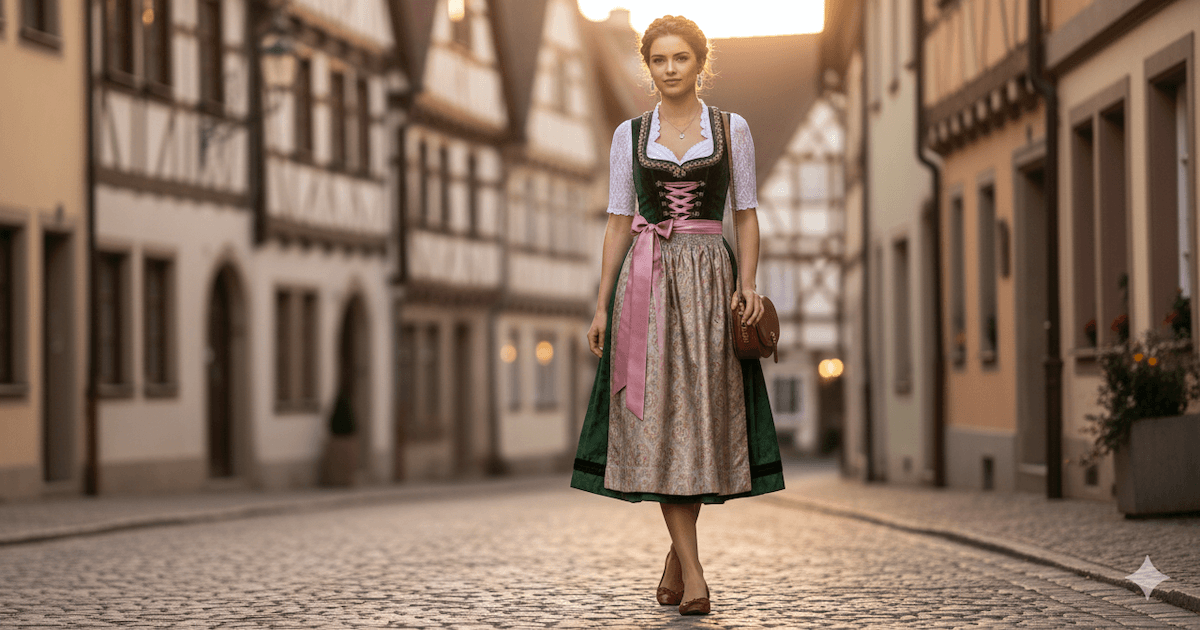
A dirndl isn't a single dress—it's a coordinated outfit consisting of multiple pieces that work together to create the iconic Bavarian look. Understanding each component is essential.
The Bodice (Mieder)
The bodice is the fitted top portion that extends from your waist to just below your bust. It's typically tight, emphasizing your waist, and closes either with a zipper or buttons. The bodice can feature decorative elements like embroidery, braided trim, grommets, lace, or chain lacing—each style adding personality to your overall look.
The bodice creates that flattering silhouette dirndls are famous for. Think of it as the foundation piece that sets the tone for your entire outfit. Quality matters here—a well-fitted bodice should feel secure and comfortable, not restricting your breathing or movement.
Modern dirndls sometimes feature decorative brooches, enamel pins, or charms clipped to the bodice for extra customization.
The Skirt (Rock)
The dirndl skirt attaches at the waistline and flows down in gathers or accordion pleats. This is where you get to decide your aesthetic—and it's a bigger choice than you might think.
Length options:
- Mini dirndls (around 20 inches/50 cm): Above the knee, more modern and casual. Great for younger visitors or those wanting a sportier vibe. Note: Mini dirndls are increasingly falling out of favor with fashion experts—very short dirndls read as inauthentic.
- Midi dirndls (around 28 inches/70 cm): Just below or at the knee. This is the sweet spot for modern Oktoberfest fashion. Elegant, flattering, practical, and authentic without feeling costume-y.
- Maxi dirndls (reaching ankle): Traditional and formal. Perfect if you want to embody historical Bavarian style.
The traditional recommendation is 70 cm (knee-length) or longer for an elegant look that photographs beautifully.
Pro tip: Modern dirndls should include pockets—essential for storing your phone, lipstick, and festival survival items.
The Apron (Schürze)
The apron is arguably the most recognizable component of a dirndl. It ties at the waist and adds a pop of color, pattern, or texture. Aprons come in every imaginable variation: sheer, printed, embroidered, velvet, plain, or elaborately decorated.
Critically, the apron length should match the hem of your skirt. If your apron hangs longer than your dress, you'll look like you forgot your actual outfit.
The apron is where your personality really shines. You can coordinate with your skirt for a monochromatic look, contrast boldly with complementary colors, or choose embellished aprons that become the focal point of your outfit.
The Blouse (Bluse)
The traditional dirndl blouse is white or ivory, typically featuring puffy or puffed sleeves and a modest neckline. The blouse peeks out from under the bodice, creating that signature Bavarian look.
Modern options:
- White (classic and timeless)
- Ivory (softer alternative to white)
- Black (surprisingly chic and modern)
- Colored blouses (match or contrast your dirndl)
- Patterned blouses (add visual interest, though use restraint)
Style considerations:
- If your dirndl is colorful, opt for a restrained blouse that doesn't compete
- If your dirndl is plain, an eye-catching blouse works beautifully
- Off-shoulder or low-neckline blouses add modern flair but should feel tasteful
- High-necked or turtleneck blouses are increasingly trendy for a more modest aesthetic
- Lace blouses add elegance and femininity
Pro tip: Choose blouse material based on weather. White cotton works for warm days; long-sleeved or thermal options for chilly Oktoberfest evenings.
Optional: Bloomers and Petticoats
Many women choose to wear bloomers (pettipants) under the skirt—essentially adorable pants that show if you're going to dance enthusiastically or bench-sit in a way that reveals undergarments. This is optional but highly practical.
Petticoats go under the skirt to add volume and create that classic "poofed" aesthetic. They're optional but add fun flair. If you use a petticoat, ensure the lace never peeks below the dirndl hem.
The Dirndl Bow: More Than Decoration
Here's where it gets interesting—and slightly confusing. The position of your apron bow is supposed to communicate your relationship status. Is this actually enforced or meaningful? Not really. But it's fun, and understanding it deepens your Oktoberfest experience.
Dirndl bow on the left side = Single
If you tie your apron bow on the left, you're announcing that you're single and open to flirting. This is traditionally interpreted as "available and ready to mingle." The Bavarian saying goes: "Bow on the left brings luck!"
Dirndl bow on the right side = Taken
Tying your bow on the right signals that you're in a relationship, engaged, or married. This is supposed to discourage unwanted flirting attempts. Think of it as the dirndl equivalent of wearing a wedding ring.
Dirndl bow in the center front = Virgin or Undecided
Historically, this meant you were a virgin. Today, that interpretation has softened considerably. Most modern interpretations suggest it means "I'm not disclosing my relationship status" or "mind your own business." It's honestly not commonly worn at modern Oktoberfest.
Dirndl bow in the back = Waitress or Widowed
Servers wear their bows at the back so they can access their apron pockets for money and tips. Historically, widows also wore their bows at the back. You'll rarely see this outside of actual waitstaff.
Important reality check: These bow positions are traditional customs, not rules. Tie your bow wherever feels right. The modern interpretation is increasingly pragmatic—women are simply communicating what they want communicated (or nothing at all). Many women change their bow position throughout the day based on mood or simply because they like how it looks.
Dirndl Styling: The Complete Outfit
A dirndl doesn't exist in isolation. Here's how to complete the look:
Footwear
Avoid heels—they'll get stuck in festival floorboards and make standing for hours miserable. Opt for:
- Comfortable leather boots (classic and supportive)
- Flat ballet-style shoes (cute and practical)
- Comfortable sneakers disguised as boots
- Mary Janes (charming and functional)
Avoid: flip-flops, Birkenstocks, or anything that screams "tourist."
Accessories
- Hat: A traditional felt hat or alpine-style hat adds authenticity and character
- Jewelry: Delicate brooches, enamel pins, or traditional amber/coral necklaces complement the look
- Bag: A small crossbody bag or leather purse (remember the 3-liter bag limit at Oktoberfest)
- Stockings: Tights or knee-high socks complete the traditional aesthetic
Layering for Weather
September weather in Munich ranges from warm (19°C/66°F) to chilly (8°C/46°F). Plan accordingly:
- Light cardigan for layering
- Lace shawl or wrap for evenings
- Lightweight jacket that coordinates with your outfit
- Long-sleeved blouse for warmth
2025 Dirndl Trends
Fashion experts and professional dirndl designers have identified key trends for Oktoberfest 2025:
In Trend:
- Velvet dirndls: Soft, luxurious, elegant material that photographs beautifully
- Monochromatic looks: Coordinated dirndl, apron, and blouse in the same color family (apricot, lavender, lilac are particularly trendy)
- Dirndls with integrated sleeves: V-neck or puffed sleeves eliminate the need for a separate blouse
- Nature-inspired colors: Earthy tones, forest greens, warm browns
- Midi length: The 70 cm knee-length is the new standard for elegance
- Minimal, elegant design: Quality over quantity—fewer embellishments but higher-quality materials
Out of Trend:
- Dirndls that are too short: Anything significantly above the knee reads as inauthentic
- Excessive lacing: Ribbon lacing is being replaced by simpler, cleaner designs
- Overloaded with embellishments: Dirndls with excessive lace, glitter, rhinestones, and sparkles look cheap
- Cheap polyester materials: Invest in quality fabrics—cotton, linen, velvet, silk
Current Designer Influence:
Taylor Swift's attendance at Munich summer concerts has influenced 2025 dirndl design, with designers incorporating modern colors (blues, whites) with traditional Bavarian elements. Celebrity stylist input emphasizes "International flair meets Bavarian tradition" and the importance of confidence and pride in your appearance.
Fit and Sizing: The Golden Rules
The bodice: Should be skin-tight but not uncomfortable. You should be able to breathe, sit, and move without feeling restricted. A well-fitting bodice emphasizes your waist.
The waistline: Should sit at your natural waist (not hips or ribs), allowing the skirt to hang naturally and flow beautifully.
The skirt length: Most important. Traditional Oktoberfest dirndls reach just below or at the knee (approximately 70 cm). This length is most flattering and most authentic.
The apron length: Must align with the hem of your skirt—not longer, not shorter.
Dirndl Shopping: Where to Buy
In Munich (if you have time before arrival):
- Angermaier (iconic Bavarian brand)
- Käfer (luxury trachten)
- Local Trachten shops throughout the city
- Specialty boutiques in the Altstadt
Online (book in advance):
- Rare Dirndl
- Bavarian Trachten
- Etsy (supports independent designers)
- Amazon (budget options, but quality varies significantly)
Quality vs. Price:
- Budget dirndls: €60-90 (fine for casual wear, may not last)
- Mid-range: €150-300 (good quality, decent longevity)
- Premium: €400+ (exceptional quality, investment pieces)
Pro tip: Don't buy the cheapest option if you want to look authentic. Cheap polyester dirndls are instantly recognizable as touristy. Invest €150-300 for a quality outfit you'll feel proud wearing and might wear for years.
Dirndl Styling Tips
Photography: Dirndls photograph best in natural light. Golden hour (late afternoon) is magical. When posing, angle your body slightly, let the skirt flow, and smile naturally. The puffed sleeves and gathered skirt create beautiful visual dimension.
Dancing and movement: Dirndls are built for movement. Embrace it. Dance, spin, enjoy how the skirt flows. This is where the outfit truly shines.
Hair and makeup: Traditional braids or updos work beautifully. Modern styles also work—find what makes you feel confident. Makeup can be dramatic or natural; Oktoberfest celebrates both.
Confidence: The most important styling element. Wear your dirndl with pride. Whether you're a first-timer or a Bavarian local, owning your look makes all the difference.
Important Reality Check: Do You Have to Wear a Dirndl?
Absolutely not. Oktoberfest has no enforced dress code. You can wear jeans, a sweater, and sneakers if you want to.
But—and this is worth emphasizing—wearing a dirndl genuinely enhances the experience. It connects you to centuries of Bavarian tradition. It photographs beautifully. It makes you feel special. Other festivalgoers dress up, and being dressed appropriately for the occasion matters.
That said, if you're not comfortable in traditional dress, don't force it. A respectful, well-put-together regular outfit is infinitely better than a dirndl you hate wearing.
Men's Oktoberfest Wear: The Lederhosen Option
While this guide focuses on dirndls, men shouldn't feel left out. Traditional men's wear features lederhosen (leather pants) paired with traditional shirts, vests, and hats.
2025 men's trends emphasize: hand-finished leather in deer or buckskin, elaborate embroidery often in vintage styles, bold colors like bordeaux and bright blue, and gold accents.
Men's no-gos: ill-fitting leather pants, T-shirts under waistcoats, short-sleeved shirts under traditional clothing.
The Bottom Line
A dirndl is more than clothing—it's a cultural experience. Whether you're embracing full Bavarian authenticity or simply participating in festival tradition, wearing a well-fitted, thoughtfully-styled dirndl deepens your Oktoberfest connection.
Take time choosing your dirndl. Invest in quality. Pair it thoughtfully with the right blouse, apron, and accessories. Tie your bow with intention (or whimsy). Wear it with confidence.
You'll arrive at Oktoberfest, walk through those gates in your dirndl, and immediately understand why this tradition has survived for over 200 years.
You'll feel it. You'll belong.
Prost!