Yes, you'll see roasted chicken and giant pretzels everywhere at Oktoberfest. They're iconic. They're convenient. They're also kind of boring if that's all you eat.
The truth is, Oktoberfest's food scene is far more diverse and sophisticated than most first-timers realize. Beyond the predictable Hendl and Breze lies genuine Bavarian culinary tradition—dishes that have been perfected over centuries, that tell stories of regional culture, and that absolutely deserve a spot on your Wiesn itinerary.
If you want to eat like a true Bavarian rather than a typical tourist, here are the dishes you actually need to try.
The Heavyweight Champion: Schweinshaxe
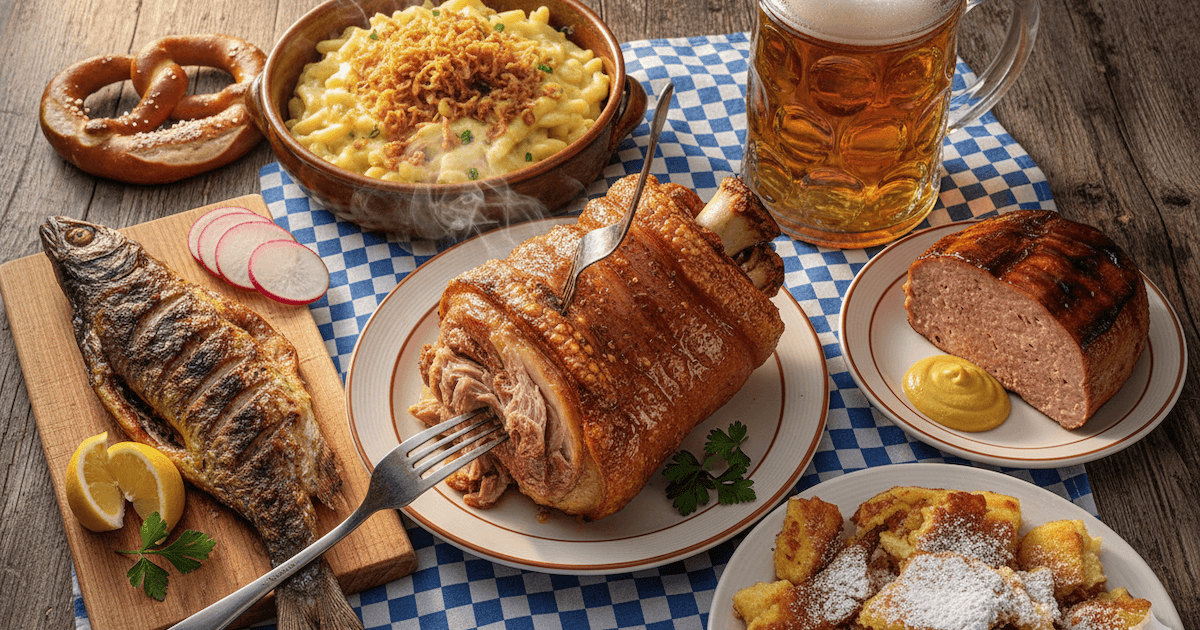
Let's start with the most iconic Bavarian dish: Schweinshaxe (pronounced SHVYNE-hock-suh), or roasted pork knuckle. This is not subtle food. This is a massive, glistening, caramelized pork knuckle—the end of the pig's leg complete with skin—that's been slow-roasted for hours until the meat falls off the bone and the skin crackles like glass.
A single Schweinshaxe is roughly the size of a football and weighs around 1-2 kg. One person can eat one, but honestly, it's more satisfying shared, especially if you're also drinking heavily.
The magic happens in the preparation. The pork knuckle gets marinated for days, sometimes a full week, then roasted at low temperatures for 2-3 hours until the exterior becomes golden-brown and crackling, while the interior remains fall-off-the-bone tender. The contrast between the crispy, salty skin and the succulent meat is absolutely extraordinary.
It's traditionally served with red cabbage, sauerkraut, potato dumplings, and a rich gravy that you'll want to pour over everything. The potato dumplings (Knödel) are essential—they're pillowy, tender, and perfect for soaking up the gravy.
Where to eat it: Almost every large tent serves Schweinshaxe, but the Ochsenbraterei specializes in it. Expect to pay €20-30 and commit at least 45 minutes to properly demolishing this beast.
Pro tip: The most coveted part is the skin. If you get a piece with crackling, you've won the Oktoberfest food lottery. Eat it first while it's still crispy.
The Underrated Star: Steckerlfisch (Fish on a Stick)
If you're looking for a break from the relentless pork and beef, Steckerlfisch is your answer. This is a whole fish—typically mackerel, trout, or whitefish—skewered on a wooden stick and grilled over an open flame until the skin chars and the flesh becomes flaky and tender.
The fish is marinated in oil, herbs, garlic, and spices before grilling, so despite being "just fish," it's incredibly flavorful. It arrives wrapped in paper, you squeeze fresh lemon over it, add a pinch of salt, and eat it with your hands while standing up.
Steckerlfisch is lighter than Schweinshaxe, more affordable (€8-12), and honestly one of the most satisfying things you can eat at Oktoberfest. The smoky, charred exterior contrasts beautifully with the tender, delicate fish inside. It's the perfect meal when you want to eat without completely abandoning the festival for an hour-long dinner.
Where to eat it: Fischer-Vroni tent features a 50-foot (15-meter) open grill dedicated entirely to Steckerlfisch. The entire tent smells like grilled fish, which sounds off-putting but is actually incredible. You can grab one and eat it in the beer garden or at a table. This is also one of the few tents where you can actually get a decent pescatarian meal.
Pro tip: Go for the mackerel—it has more flavor than the milder white fish. And eat it immediately after receiving it; the texture changes as it cools.
The Dumpster Fire That's Actually Delicious: Leberkäse
Don't let the name fool you. Leberkäse (literally "liver cheese") contains neither liver nor cheese. It's actually a Bavarian meatloaf made from finely ground corned beef, pork, bacon, onions, and seasonings, baked until it develops a crispy, golden-brown exterior.
It's an acquired taste—the texture is somewhere between meatloaf and sausage, dense and protein-packed. But locals go crazy for it. The most prized part is the crispy brown end piece that gets the most caramelization during baking.
Leberkäse is traditionally served as a thick slice in a crusty white bread roll (Leberkäse Semmel) with a generous dollop of sweet mustard. Some variations top it with a fried egg and potato salad on the side. It's cheap (€5-8), filling, and weirdly addictive once you get over the initial texture shock.
Where to eat it: Look for cold food stands (Brotzeit stands) scattered throughout the festival grounds. These are less glamorous than the tent restaurants but often have superior quality because they specialize in this stuff.
Pro tip: Order it with sweet mustard (Süßer Senf), never sharp yellow mustard. The sweetness complements the savory meat perfectly.
The Overlooked Gem: Käsespätzle (German Mac and Cheese)
This is Bavarian soul food—homemade egg noodles (Spätzle) mixed with melted cheese and topped with crispy fried onions. It sounds simple. It tastes like pure comfort.
Spätzle is similar to pasta but wetter, with an almost dumpling-like texture. When mixed with melted Emmental or Gruyère cheese and those crispy fried onions, it becomes something transcendent. It's hearty without being as meat-heavy as Schweinshaxe, filling without being as starchy as dumplings.
Käsespätzle is the perfect dish when you're tired, drunk, and need sustenance without committing to a massive pork knuckle. It's also one of the few vegetarian options that doesn't feel like an afterthought.
Where to eat it: Most large tents offer it, particularly the Augustiner and Paulaner tents. Expect €8-12.
Pro tip: Eat it immediately—it congeals as it cools and becomes significantly less appealing. If it arrives lukewarm, send it back.
The Forgotten Classic: Rettich (Salted Radish)
This sounds ridiculous. It is. But Rettich deserves mention because it's surprisingly important to the Oktoberfest experience.
Rettich is simply sliced white radish that's been salted and served with nothing else. It's crunchy, slightly spicy, refreshing, and the perfect palate cleanser between beers and heavier foods.
Historically, when Oktoberfest celebrations began in the 1810s, most people ate bread, cheese, and salted radish—not the massive meat dishes that dominate menus today. Rettich represents that original, simpler festival tradition.
Modern visitors often dismiss it, but locals understand its value. It's cheap (€2-3), it cuts through the richness of the meat, and it adds texture and brightness to your meal.
Where to eat it: Any tent or food stand. Look for it on mixed cold platters (Brotzeitbrettl).
Pro tip: Pair it with a bite of cheese and a piece of bread (along with your beer) for a traditionally authentic Oktoberfest meal.
The Royal Experience: Ochsenbraten (Roast Ox)
If Schweinshaxe is the commoner's feast, Ochsenbraten is the king's. This is slow-roasted beef from an actual ox (or large steer), served in massive portions with rich gravy, potatoes, and seasonal vegetables.
The meat is incredibly tender—it literally falls apart when you touch it with a fork—and the flavor is deep, beefy, and complex. It's expensive (€25-35) and rare compared to pork options, but it's an absolute once-in-a-lifetime experience if you get quality preparation.
The challenge: Getting a good one. Not all Ochsenbraten is created equal. Bad versions are tough and flavorless. Great versions are life-changing.
Where to eat it: The Ochsenbraterei tent is literally named after this dish and is your best bet for quality. It's a specialty tent with 4,700 seats dedicated to roasted ox preparation, so if anywhere knows how to do it right, it's there.
Pro tip: Go early or late—mid-afternoon tends to be when the meat quality drops after hours of service. Arrive at opening (9 AM) or after 6 PM for the best cuts.
The Sweet Redemption: Kaiserschmarrn
After hours of heavy Bavarian meat, you need dessert. Enter Kaiserschmarrn—"the emperor's mess"—a fluffy, caramelized pancake that's deliberately torn into chunks while cooking, then served in a mound and dusted generously with powdered sugar.
The pancake batter is often made with a separation of egg whites and yolks (the whites are beaten stiff for extra fluffiness), resulting in something between a pancake and a soufflé. Some versions include plum jam as filling.
It's light, sweet, and the perfect palate cleanser after savory, salty Schweinshaxe. At only €5-8, it's also cheap compared to the main courses.
Where to eat it: Café Kaiserschmarrn specializes in it (obviously), but most tents have at least a decent version. The Café version is technically superior if you have time for a proper break.
Pro tip: Eat it warm, never cold. And don't skip the powdered sugar—it's essential to the experience, not decoration.
The Addictive Treasure: Gebrannte Mandeln (Candied Almonds)
Before you even enter the festival grounds, you'll smell them: Gebrannte Mandeln (pronounced guh-BRAN-tuh MUN-delun). This is the scent that announces you've arrived at Oktoberfest.
Gebrannte Mandeln are whole almonds roasted with sugar, cinnamon, and vanilla until they're coated in a caramelized, crystallized shell. They start as a sugar syrup, go through various stages of crystallization and caramelization, and end up with an addictively crunchy exterior that gives way to toasted almond inside.
The magic is in the technique. The sugar coating goes through approximately four phases: first it becomes a thick syrup, then it crystallizes and becomes powdery (this looks like a disaster but it's supposed to happen), then it begins to melt and caramelize, creating the final bumpy, rough, caramelized coating that makes these almonds so special.
They're €3-4 for a bag, incredibly portable, and the kind of snack where you promise yourself "I'll only eat a few" before you realize the entire bag has disappeared and you're dusting caramel remnants off your shirt.
Gebrannte Mandeln are available year-round at German Christmas markets, but they're an essential Oktoberfest staple. Many vendors also roast cashews, macadamia nuts, peanuts, and walnuts using the same technique, but almonds are the classic.
Where to get them: Vendor stands are scattered throughout the entire Oktoberfest grounds. You'll know them by smell—literally just follow your nose. They're also found at the food stands and sometimes inside tents.
Pro tip: Ask for freshly roasted if possible—the texture and flavor are significantly better when they're still warm. They keep for a few days in an airtight container but are genuinely best consumed immediately.
Eating Strategy for Maximum Enjoyment
Breakfast before arriving: Eat something substantial before heading to Oktoberfest. You'll make better food decisions and pace yourself better.
Don't do three massive meals: Instead, eat multiple small meals throughout the day. Share a Schweinshaxe at lunch, then grab Steckerlfisch or Käsespätzle later in the evening.
Use food to pace drinking: Heavy food slows alcohol absorption. Eating regularly allows you to drink more responsibly and enjoy the festival longer.
Avoid the mid-afternoon slump: Most food quality drops around 3-5 PM after lunch rush but before dinner rush. Eat earlier or later for better quality.
Tip your servers: Food service people at Oktoberfest are working incredibly hard. Tip €1-2 per food order, especially if you're taking up table space.
The Bottom Line
Roasted chicken and pretzels are fine. They're traditional. They're not wrong. But they're the boring version of Oktoberfest.
The real experience comes from Schweinshaxe's crispy skin, Steckerlfisch's smoky char, Leberkäse's savory richness, and Kaiserschmarrn's sweet redemption. These are dishes that represent centuries of Bavarian culinary tradition, that connect you to generations of Wiesn celebrants, that actually taste extraordinary.
Don't just eat at Oktoberfest. Eat like a Bavarian. Prost!